Georges Lanvalle
Impure BloodGeorges Lanvalle is a senior DCRI commandant whose appearance at a Tour de France security meeting turns a purported terrorist ultimatum into a test of credibility. He first displays a ransom-note-like message assembled from newspaper clippings, then reveals that the group claiming responsibility does not exist. His measured handling of the announcement shifts the room from alarm toward the difficult work of distinguishing a manufactured threat from the real political tensions it exploits.
Identity and Introduction
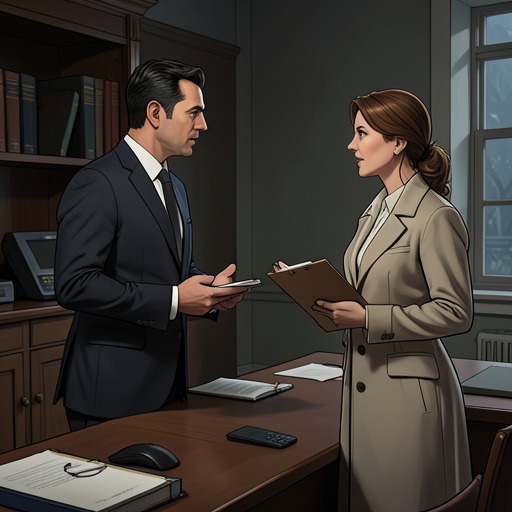
Lanvalle is identified by his office as a commandant of the DCRI, France’s interior intelligence agency. When André Soutine introduces him at the meeting, the order of business changes abruptly: the assembly has begun with “Any Other Business?” and Soutine says the reason will become clear. Lanvalle taps the microphone and checks that it is on before beginning, presenting himself as the official who will explain the unexpected agenda.
The meeting concerns security for the Tour de France as the riders are due to pass through Nice. Lanvalle arrives before an audience of officials and other participants, among them Roland Granot, Yves Dauresse, and Vincent Dantier. The people in the hall do not initially know whether they are hearing a genuine warning. The staged form of the announcement—an envelope, a cut-and-paste message, and a silent audience—makes the alleged threat feel immediate before its truth has been established.
The Ultimatum and Its Presentation
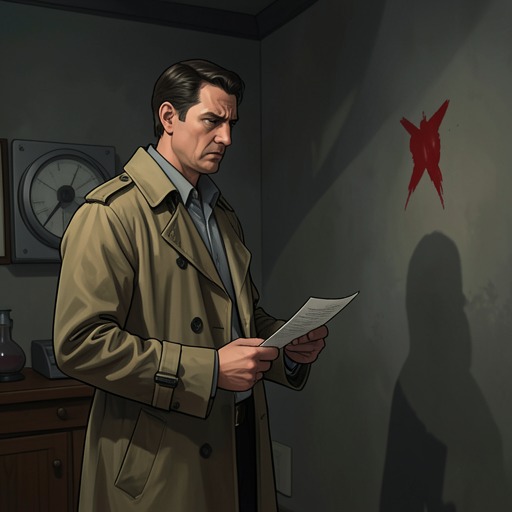
Lanvalle holds up a brown envelope and a sheet of A4 paper bearing words made from letters cut out of a newspaper. The hall falls silent as he explains that the message arrived less than two hours earlier. Addressed to the Tour de France organising committee, it warns that the race will pass through Nice in two days and claims that the Sons and Daughters of the Just Cause will reap a bloody harvest unless their demands are met.
The timing gives the warning its force. Lanvalle tells the assembly that fewer than forty-eight hours remain to identify and apprehend the supposed group before it can act. He describes that option as a largely covert operation, one that could prevent the threat without making it a public spectacle. The ultimatum therefore places the authorities under pressure not only to protect the race but also to decide quickly whether the claimed organization is real.
Exposing the Claim
Lanvalle asks whether anyone has encountered the alleged group. Roland Granot and Yves Dauresse have not; Dauresse indicates that Lanvalle has not either. Lanvalle confirms the absence of any such person, stating that, to the best of the authorities’ knowledge—which he calls completely accurate—no one matching the claim exists anywhere. Enquiries will continue, but the revelation undercuts the ultimatum’s central premise: the group named in the message is fictitious.
The announcement produces a visible reaction. Vincent Dantier’s elbow shoots out involuntarily and digs into Granot, registering the force of the revelation in the audience’s physical response. The moment recasts the newspaper-clipping message. Its threatening appearance has successfully commanded attention, but the identity offered as its source cannot withstand scrutiny.
The Demands and Their Political Context
After establishing that the named group does not exist, Lanvalle turns to the demands. He characterizes the first two as unrealistic and unrealisable. By contrast, he says that the demand concerning the acceptability of Muslim dress relates to a current issue, as does the demand for a first mosque in Nice. The contrast matters: the supposed organization is fabricated, but some of the subjects invoked by its message belong to actual public debate.
Lanvalle’s assessment keeps the investigation from collapsing the entire incident into a single conclusion. The false identity does not make every issue in the ultimatum unreal; rather, the message appears to draw on contested questions to give its threat plausibility. In the scene, Lanvalle’s role is to separate what can be verified—the nonexistent group—from demands that intersect with tensions already present in the city. His restrained, procedural disclosure replaces the initial spectacle of imminent violence with a more exacting question about who is using that spectacle and why.